
 By Tosin Opeyemi
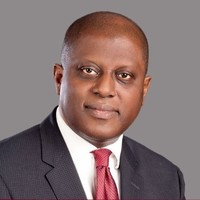
Since its establishment in 1958, the Central Bank of Nigeria (CBN) has been led by 12 substantive governors. The first CBN governor was a British banker, Roy Pentelow Fenton, while the first Nigerian to lead the apex bank was Alhaji Aliyu Mai-Bornu.
Over nearly 70 years of its existence, each governor has shaped how Nigerians save, spend, borrow, and do business, from introducing the Naira to overhauling troubled banks.
Here is the complete chronological list of CBN governors in Nigeria from 1958 to 2026 and what defined each person’s time in office.
Quick summary and term in office
| CBN governor | Term in office | Key milestone |
| Roy Pentelow Fenton | 24 Jul 1958 – 24 Jul 1963 | First CBN Governor; seconded from the Bank of England to launch the bank |
| Alhaji Aliyu Mai-Bornu | 25 Jul 1963 – 22 Jun 1967 | First indigenous Nigerian Governor of the Central Bank. |
| Dr. Clement Nyong Isong | 15 Aug 1967 – 22 Sep 1975 | Led the CBN during the Civil War and oversaw the switch from Pound to Naira |
| Mallam Adamu Ciroma | 24 Sep 1975 – 28 Jun 1977 | Former CBN board director who later served across major federal ministries |
| Mr. Ola Vincent | 28 Jun 1977 – 28 Jun 1982 | Former African Development Bank Vice President who guided late-1970s policy. |
| Alhaji Abdulkadir Ahmed | 28 Jun 1982 – 30 Sep 1993 | Longest-serving CBN Governor, leading the bank for more than 11 years |
| Dr. Paul Agbai Ogwuma | 1 Oct 1993 – 29 May 1999 | Former Union Bank CEO who navigated the 1990s banking sector distress. |
| Dr. Joseph Oladele Sanusi | 29 May 1999 – 29 May 2004 | Former UBA & First Bank CEO recalled from retirement at the return of democracy |
| Prof. Chukwuma C. Soludo | 29 May 2004 – 29 May 2009 | Led Nigeria’s landmark 2004–2005 banking consolidation and backed the AFC. |
| Mallam Sanusi Lamido Sanusi | 3 Jun 2009 – 2 Jun 2014 | Rescued distressed banks after the 2009 crisis and capped bank CEO tenures at 10 years |
| Mr. Godwin Emefiele | 3 Jun 2014 – 25 Sep 2023 | Former Zenith Bank CEO; oversaw development finance, eNaira, and naira redesign |
| Mr. Olayemi Cardoso (Current) | Sep/Oct 2023 – Present | Former Citibank Nigeria Chair focused on FX unification, inflation, and recapitalisation |
Note on Acting Governors
Following suspensions during their terms, Dr. Sarah Alade served as Acting Governor from February to June 2014, and Mr. Folashodun Shonubi served as Acting Governor from June to September 2023.
A closer look at every CBN governor in Nigeria
1. Roy Pentelow Fenton (July 1958 – July 1963)
Before Nigeria gained independence, the British government seconded Roy Fenton from the Bank of England to build and launch Nigeria’s central bank from scratch. A World War II army commander who had represented the United Kingdom on the Managing Board of the European Payments Union in Paris, Fenton spent five years putting the CBN’s early operations in place before returning to senior leadership roles at the Bank of England.
2. Alhaji Aliyu Mai-Bornu (July 1963 – June 1967)
Born in 1919, Aliyu Mai-Bornu started his career as an English teacher in Yola and Kaduna before studying economics at Bristol University in the UK. He joined the newly established CBN in 1959 as an Assistant Secretary, rose rapidly to Deputy Governor in 1962, and made history in July 1963 as the first indigenous Nigerian Governor of the Central Bank.
3. Dr. Clement Nyong Isong (August 1967 – September 1975)
Educated at Iowa Wesleyan College and Harvard Graduate School, Dr. Isong worked at the Federal Reserve Bank of New York and lectured at the University of Ibadan before joining the CBN in 1958. After serving five years at the International Monetary Fund (IMF) as an International Adviser for Africa, he returned home during the Nigerian Civil War in 1967 to lead the bank. Over eight years, he steered the CBN through wartime economic pressures and oversaw Nigeria’s historic currency changeover from the Nigerian Pound to the Naira.
4. Mallam Adamu Ciroma (September 1975 – June 1977)
Born in Potiskum, Yobe State, and educated at Barewa College, Zaria, and the University of Ibadan, Adamu Ciroma joined the CBN Board as a Director in 1970 before he was appointed Governor in 1975. Though his time at the central bank was brief, he went on to shape national economic policy as a Federal Minister across the Ministries of Industry, Agriculture, and Finance.
5. Mr. Ola Vincent (June 1977 – June 1982)
Widely respected as an economist and elder statesman, Ola Vincent brought strong continental banking experience to the CBN after serving as Vice President of the African Development Bank (AfDB) in Abidjan from 1966 to 1973. He guided Nigeria’s monetary policy through the late-1970s oil boom and the country’s transition back to civilian government in 1979.
6. Alhaji Abdulkadir Ahmed (June 1982 – September 1993)
Hailing from Jama’are in Bauchi State and educated at Barewa College, Zaria, and South West London College, Abdulkadir Ahmed worked at the New Nigerian Development Company (NNDC) and served as Bauchi State’s first Commissioner of Finance before becoming CBN Deputy Governor in 1977. Appointed Governor in June 1982, he remained in office for more than 11 years, making him the longest-serving head in the bank’s history.
7. Dr. Paul Agbai Ogwuma (October 1993 – May 1999)
A chartered accountant and commercial banker trained at Bradford University in the UK, Dr. Ogwuma served as Managing Director and CEO of Union Bank of Nigeria before taking over at the CBN in October 1993. His tenure coincided with one of the toughest periods for Nigerian banking, marked by widespread institutional distress and strict regulatory cleanups.
8. Chief (Dr.) Joseph Oladele Sanusi (May 1999 – May 2004)
Chief J. O. Sanusi built a rare career spanning both regulation and commercial banking—serving as the first Chief Executive of the Securities and Exchange Commission (SEC), Deputy Governor of the CBN, and CEO of both United Bank for Africa (UBA) and First Bank of Nigeria. Shortly after retiring from First Bank in 1998, he was brought out of retirement in May 1999 to head the CBN at the dawn of Nigeria’s Fourth Republic.
9. Prof. Chukwuma C. Soludo (May 2004 – May 2009)
A first-class economics graduate of the University of Nigeria, Nsukka, and former Chief Economic Adviser to President Olusegun Obasanjo, Prof. Soludo reshaped Nigeria’s banking industry. He spearheaded a landmark banking sector consolidation that merged smaller lenders into stronger, well-capitalised banks, championed the creation of the Africa Finance Corporation (AFC), and earned international awards as Global and African Central Bank Governor of the Year.
10. Mallam Sanusi Lamido Sanusi (June 2009 – June 2014)
An Ahmadu Bello University alumnus and former CEO of First Bank, Sanusi took office in the middle of the 2009 global financial crisis. Following a joint CBN-NDIC audit that uncovered severe distress in eight banks, he injected bailout funds, replaced failing bank executives, enforced a 10-year tenure limit for bank CEOs, and abolished universal banking licenses. He was suspended in February 2014, with Deputy Governor Dr. Sarah Alade serving as Acting Governor until his formal tenure ended in June 2014.
11. Mr. Godwin Emefiele (June 2014 – September 2023)
After 26 years in commercial banking, culminating as Group Managing Director and CEO of Zenith Bank, Godwin Emefiele became CBN Governor in June 2014. Across nine years spanning three administrations, his tenure featured multiple foreign exchange windows, large-scale intervention loans in agriculture and manufacturing, the launch of the eNaira, and the botched 2022/2023 naira redesign before his suspension in June 2023 and formal exit in September 2023.
12. Mr. Olayemi Cardoso (September 2023 – Present)
Appointed in September 2023 and confirmed by the Senate in October 2023, Olayemi Michael Cardoso is the current Governor of the Central Bank of Nigeria. A former Chairman of Citibank Nigeria and former Lagos State Commissioner for Economic Planning and Budget, Cardoso has focused his tenure on unifying Nigeria’s exchange rate windows, clearing verified FX backlogs, tightening monetary policy to rein in inflation, and overseeing a fresh round of bank recapitalisation.
 INFOMEDIANG SOLUTIONS
 Azeez Ope Quadri