 By Azeez Ope Quadri
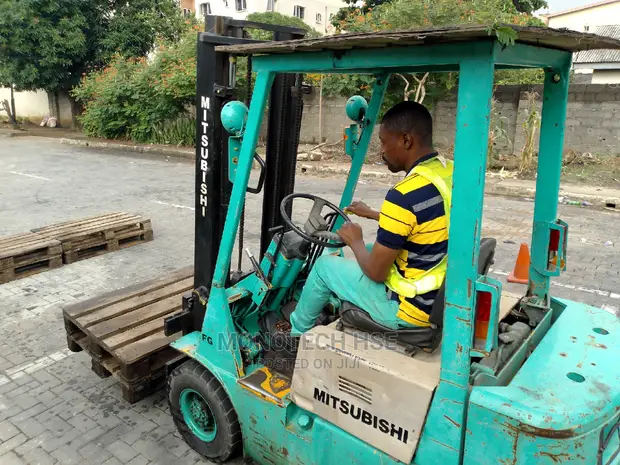
Who are forklift drivers?
Forklift drivers are skilled decision-makers who manage physical load balance, spatial geometry, hazard identification, and digital fleet software simultaneously under fast-paced working modern supply chains.
They keep raw materials moving into production lines and ensure finished goods flow smoothly into logistics channels. Operating across diverse sectors including manufacturing (42% of fatal accidents), construction (24%), wholesale trade (12.5%), transport (11%), retail (9%), and mining (1.5%), these professionals handle immense operational responsibility (GenieGrips, 2022).
Often referred to as powered industrial truck operators or forklift drivers, they are operators who hop on, lift a pallet, drive across a warehouse floor, and lower the load. That sounds simple, right?
However, anyone who has managed a busy distribution centre, manufacturing plant, or construction site understands that it isn’t as simple as it sounds.
For instance, a single misjudgment can lead to severe worker injury, thousands of dollars in damaged inventory, or complete operational downtime. As such, it isn’t guesswork.
Role of the modern forklift operator
Today’s logistics landscape is different from what we used to have decades ago, where most of the task were handled manually. Today, warehouses are tighter, racks are taller, and supply chains operate under relentless speed demands (Toyota Material Handling Europe, 2026).
Modern forklift operators do not work in isolation; they navigate complex environments alongside pedestrians, delivery vehicles, and automated machinery.
Similarly, digital transformation has introduced telematics, Warehouse Management Systems (WMS), onboard display terminals, and digital pre-operation safety checklists into their daily routine. Hence, a forklift operator is not merely a vehicle driver.
Benefits of forklift operator training
1) Retention & career growth: Fosters an organizational safety culture. Employees feel valued and gain pathways toward supervisory and managerial roles.
2) Advanced skill development: Operators gain precision in narrow aisles, master sloped/uneven surfaces, and learn effective equipment troubleshooting.
3) Substantial cost savings: Dramatically reduces mechanical repair bills, extends machine lifespan, lowers insurance premiums, and cuts the $2B annual industry loss from product damage.
4) Operational efficiency: Trained drivers master load distribution, smooth manoeuvring, and quick spatial judgement, speeding up dock turnaround and throughput (Canada Safety Training, n.d.).
5) Workplace safety & injury reduction: Drastically cuts tip-overs, pedestrian collisions, and rack impacts. Studies confirm proper training prevents the vast majority of severe workplace incidents
Safety and incident prevention
According to GenieGrips, (2022), forklift accidents in the workplace cause approximately 85 fatalities and 35,000 serious injuries every year globally, with over 10% of all forklift operators involved in an accident annually. The primary cause of fatal accidents is forklift tipping (42%), followed by crush injuries between the lift and another surface (25%), collisions between two forklifts (11%), and striking pedestrians (10%). Structured training addresses these risks directly by teaching stability mechanics, blind-spot awareness, and pedestrian safety protocols.
Financial protection and fleet longevity
Inexperienced operators inadvertently inflict heavy financial damage on businesses through improper maintenance, high-speed turning, and harsh braking. Operator errors account for over $2 billion in damaged products each year across industries.
Trained operators conduct proper pre-operational checks, identify minor mechanical defects before they cause catastrophic breakdowns, and preserve equipment integrity, adding years to machine service life and significantly lowering repair expenses (Eastern Lift Truck, 2016).
Why forklift driving certification is important
Strict legal compliance and liability protection
Operating a forklift without a valid, recognized license or certification is illegal across major regulatory jurisdictions such as the United States, United Kingdom, Australia among others.
In the United States, for instance, OSHA standard 29 CFR 1910.178(l) strictly mandates formal instruction, practical hands-on training, and workplace evaluation before machine operation.
Similarly, Work Health and Safety (WHS) laws in Australia require operators to hold a valid license issued by a Registered Training Organisation (RTO). Non-compliance exposes employers to severe corporate fines and leaves unlicensed operators personally liable in the event of an accident.
Mandatory evaluation and refresher triggers
OSHA regulations stipulate that operator performance must be re-evaluated at least once every three years. Mandatory refresher training is explicitly triggered whenever:
- An operator is involved in an accident or near-miss incident.
- An operator is observed driving in an unsafe manner.
- Workplace conditions change or an operator is assigned to a different type of forklift (e.g., transitioning from a counterbalanced lift to a reach truck).
Safety measures every driver must follow
1) Pre-operation inspections: Inspect fluid levels, tires, brakes, forks, and safety controls before starting every shift to catch mechanical defects early
2) Load management & travel height: Keep tynes low to the ground, at least 152 mm (6 inches) off the floor, while traveling. Never exceed listed weight capacity or tilt elevated loads excessively
3) Seatbelt & tip-over survival: Always wear the seatbelt. If a rollover occurs, stay inside, hold the wheel firmly, brace your feet, and lean away from the impact; NEVER attempt to jump out
4) Speed & blind spot signals: Maintain safe speed limits. Sound the horn when reversing, entering blind intersections, or approaching pedestrian crosswalks. Use a spotter if vision is blocked
5) Surface adaptation & narrow aisles: Reduce speed and adjust steering on ramps, slopes, or gravel. Maintain precision control in narrow warehouse aisles with centimetres of clearance
Takeaways
- Forklift drivers are essential decision-makers in global supply chains.
- Formal instruction prevents severe workplace injuries, slashes equipment repair bills, and saves billions in inventory loss.
- Compliance with standards like OSHA 29 CFR 1910.178 and Australian WHS laws is legally binding. Re-evaluations are required every 3 years or after safety incidents.
- Pre-op checks, traveling with low loads (152 mm), wearing seatbelts, sounding horns at blind corners, and remaining buckled during tip-overs are vital life-saving habits.
- Combining practical training with digital tools and internal trainer development fosters an enduring workplace safety culture.
Further reading:
- Ace Forklift Training. (2025). Don’t Risk It: Why Forklift Training Is More Than Just Driving. Sydney, Australia.
- Canada Safety Training. (n.d.). The Benefits of Forklift Operator Training. Canada Safety Training Blog.
- Eastern Lift Truck Co. (2016). Top 10 Reasons Why Forklift Training and Certification are Necessary. Eastern Lift Truck Safety & Training Series.
- GenieGrips. (2022). Why Forklift Driver Training Courses Are Important. GenieGrips Material Handling Safety Resources.
- Toyota Material Handling Europe. (2026). Why Forklift Operator Training Matters More Than Ever. Published for European Week for Safety and Health at Work.
 INFOMEDIANG SOLUTIONS
 Tosin Opeyemi