 By Azeez Quadri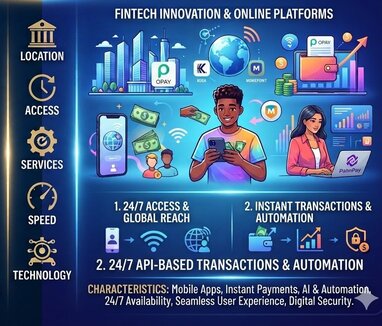
The data: Active monthly transactions on the OPay app grew by over 14 million within a year (2024 to 2025), with its customer base larger than First Bank and some of Nigeria’s conventional financial institutions.
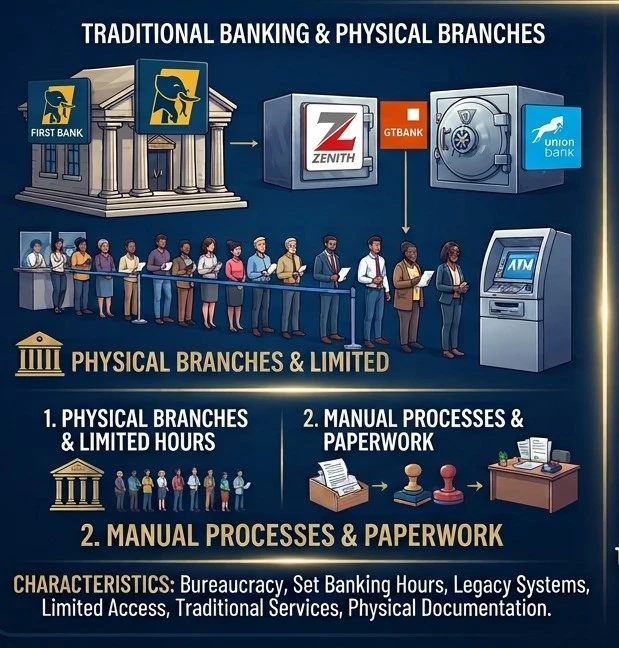
Twenty years ago, what we now call conventional banks such as Wema Bank, First Bank, Union Bank, EcoBank, etc dominated the banking sector. Back then, customers had to be physically present in bank halls to resolve issues. But the entry of digital financial service providers has changed the narrative.
What are digital financial service providers?
Digital financial service providers are banks without the conventional big physical structures that let you open a bank account, deposit, spend, receive, pay bills, save, invest and manage your money entirely on apps on your smartphone or POS terminal without mandating you to visit a physical banking hall.
Operational definition of terms: Old or conventional financial institutions in this article refer to traditional banks that have been in existence before the digitalisation of banking activities such as First Bank, Union Bank, Wema Bank, GT Bank, Access Bank etc. While fintechs refer to banks that do not rely on physical offices for banking operations, they include Opay, MoniePoint etc.
Some people erroneously call Opay, Moniepoint, Kuda Bank, and KongaPay digital financial service providers, but they do not belong to the same category; they have specific categories according to the Central Bank of Nigeria (CBN). According to the CBN, they are categorised into two distinct legal licence types:
National Microfinance Banks (MFBs) such as Fairmoney MFB, VBank, NPF MFB, Sparkle Bank, Kuda Bank, MoniePoint.
National Mobile Money Operators (MMOs) such as PalmPay Limited, Opay Digital Services, Paga, NowNow Digital Systems, Abeg Technologies, KongaPay Technologies and eTranzact International Limited etc. These digital financial service banks have changed the way we bank and transact.
Quick fact: OPay has 39.3 million active monthly users that perform transactions on its app, growing from 25.13 million in 2024 to 39.32 million by the end of 2025, according to a report by TheGuardian Newspapers.
Also, Opay has more than 500,000 mobile money agents spread across Nigeria, surpassing the the customer base of some of the oldest Nigerian banks. A Software Engineer analyst, Olufemi Ayodele, says customers’ activities on Opay surpassed First Bank in total customer activity.
So, what are digital-first banks doing differently to dominate the Nigerian banking sector?
1) Faster bank account opening
The two business bank accounts I have with Opay and MoniePoint were completed on my smartphone, with less stress shorter time, unlike the one I opened with Guaranty Trust Bank (GTB), which took almost a month.
It could even take longer to open a business account at any of Nigeria’s conventional banks if your guarantors stay outside your location.
That’s how tedious it was dealing with conventional banks before the arrival of digital financial service providers. It takes less than 48 hours to have your business account setup with MoniePoint and Kuda.
Quick verifiable data: PalmPay has over 35 million registered users; according to a report by The Punch, an average PalmPay user performs 50 transactions per month on the app, while retaining 80% of users, with more than 1 million mobile money agents and local merchants across Nigeria.
2) Faster transfers with lesser network issues
Transfers are processed faster on digital-first financial service providers. Transactions on Opay takes less than five seconds to process, similar thing can be said of Kuda, MoniePoint and PalmPay unlike other conventional banks that could take minutes or hours in some cases for transactions to process.
3) Lower Transfer Charges
Most digital-first financial service provider offer lower transfer charges to their customers. For those who transfer regularly, considering trying out any of the digital banks will be a good idea.
4) Zero SMS Notification Alert Fees
A few minutes ago, I received a debit alert (NGN43.54) from a conventional bank. Guess what it is? Yes, it is SMS ALERT CHARGE FOR 29-JUL-26 TO 28-AUG-26. I have never received such an alert from fintechs.
While these conventional financial institutions debit you for SMS alerts, digital financial institutions (fintechs, if anything) rely on in-app notifications.
Why are the old banks not using in-app notifications like the new generation digital financial service providers?
5) Rewards and Cashbacks
Customers like rewards and cashbacks. These forms of incentives may gulp millions of naira, but returns for the banks are enormous to strengthening and expanding the customer base. This is a gap FinTech financial institutions are filling.
For instance, there is cashback on bill payment, referral bonuses, recharge card bonuses, and other attractive incentives.
6) Easy Access to Savings
Most of the saving tools are in-app in all the digital financial providers, meaning you don’t have to visit banking hall to queue for long hours.
You can save for a specific goal on PiggyVest, OPay, and withdraw any time, depending on the duration you choose, without heavy penalty found in the case of conventional “old” generation banks.
7) Easy Access to Investment
Investment options on digital financial service providers is another major reason they dominate the financial sector in Nigeria. On PiggyVest, for instance, you have a list of investments you can choose from and lock in, making investing easier and enjoyable for many Nigerians.
8) Better Security Features
Fintech banks are facing new security threats in the banking sector, particularly in the age of Artificial Intelligence (AI).
Fraud are more common with conventional banks than with digital financial providers. In most cases, when an unathorised transactions happen on your account, customer support are difficult to reach. This is another gap fintechs are filling.
There are security checks such as biometric login and facial recognition when transferring unusually large amounts.
9) Swift Customer Support
Most of the fintechs offer swift customer support using an in-app chat option and support on messaging apps such as WhatsApp. This is faster than visiting a bank hall, where you would have to fill form and queue for longer hours.
10) Targeting the digital natives
Digital financial service providers are dominating the Nigerian Banking Sector because they are not taking Gen Z and the digital natives for granted. They do this by sponsoring campus shows and promotions. Also, fintechs are spending heavily on adverts, marketing and promotion, targeting the younger generation.
Conclusion
Moniepoint has over 20 million users on its ecosystem while also powering over 6 million active small and medium enterprises (SMEs), according to Vanguard Newspapers.
With the growing customer base of digital financial providers and Gen Z also preferring fintechs, what exactly is the future of the “old” conventional banks in Nigeria?
 Tosin Opeyemi